

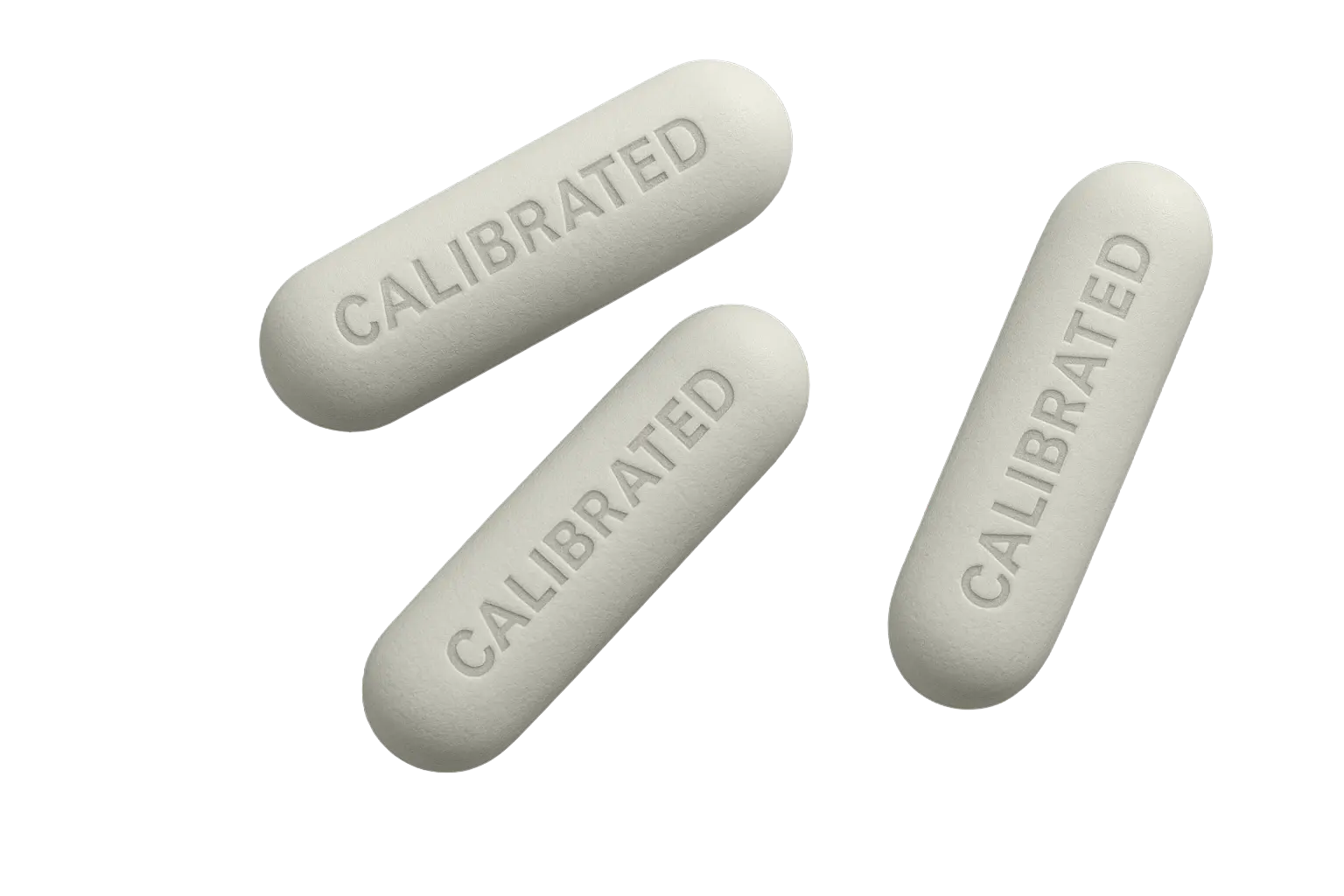
Not All TRT Is Calibrated TRT®
The difference is not just testosterone. The difference is the protocol.

Most men do not need a generic testosterone prescription and a “see you later” follow-up plan.
They need a testosterone replacement therapy program that is carefully evaluated, intelligently dosed, clinically monitored, adjusted to symptoms and labs, and delivered in the form that best matches their body, goals, lifestyle, comfort level, and risk profile.
Calibrated TRT® is a physician-guided testosterone replacement protocol for men with signs, symptoms, and lab-confirmed testosterone deficiency — available through in-clinic injections, at-home injections, or long-lasting implantable pellets that can last up to 6 months.
Are You Living With Testosterone Deficiency?
Low testosterone can feel like your edge is slowly disappearing.
Testosterone deficiency does not always announce itself all at once. For many men, it feels like a gradual decline in energy, drive, confidence, performance, recovery, libido, mood, and mental sharpness.You may be a candidate for evaluation if you are experiencing:
.webp)
Sexual Symptoms
• Reduced sex drive
• Fewer morning erections
• Weaker or less reliable erections
• Reduced sexual confidence
• Declining sexual performance or satisfaction

Energy and Motivation Symptoms
• Constant fatigue
• Lower stamina
• Less drive to train, work, compete, or lead
• Feeling like you are pushing harder for less output

Body Composition and Performance Symptoms
• Loss of strength
• Reduced muscle mass
• Increased belly fat
• Slower recovery
• Lower exercise performance
• Decreased physical resilience

Medical Clues
• Reduced sex drive
• Fewer morning erections
• Weaker or less reliable erections
• Reduced sexual confidence
• Declining sexual performance or satisfaction
The Endocrine Society lists reduced libido, erectile dysfunction, decreased spontaneous erections, decreased energy, reduced motivation, depressed mood, poor concentration, sleep disturbance, unexplained anemia, reduced muscle bulk/strength, and increased body fat among symptoms and signs associated with testosterone deficiency.
Symptoms alone are not enough. A random testosterone number alone is not enough.
The goal is to determine whether your symptoms match a real testosterone deficiency pattern and whether TRT is medically appropriate for you. Major clinical guidelines emphasize that diagnosis should combine symptoms/signs with consistently low testosterone levels.
Testosterone is powerful medicine. Generic protocols are the problem.
Many men think TRT fails because testosterone “doesn’t work.”
In reality, many TRT experiences fail because the protocol is incomplete.
A generic TRT approach may involve a basic prescription, limited education, infrequent monitoring, vague symptom tracking, and a one-size-fits-all delivery method. That can leave men undertreated, overtreated, fluctuating, frustrated, or exposed to avoidable side effects.
Calibrated TRT® is different because it is built around:
• Diagnosis
• Dosing
• Delivery method
• Lab monitoring
• Symptom response
• Contraindication screening
• Side-effect management
• Lifestyle support
• Ongoing clinical oversight
That is why the Calibrated TRT position is simple:
Better TRT is not “more testosterone.”
Better TRT is more PRECISE Testerone
Generic TRT vs. Calibrated TRT®
The 7 Pillars of Calibrated TRT®
Bio-Identical, Plant-Derived Testosterone
Calibrated TRT® uses bio-identical, plant-derived testosterone as part of a purity-focused approach to restoring testosterone in men with true deficiency. But the hormone itself is only one part of the equation.The real advantage is how testosterone is evaluated, dosed, delivered, monitored, and adjusted.
Why it matters: Calibrated TRT is not about reckless enhancement. It is about restoring deficient men toward an appropriate therapeutic range under medical supervision.
Proactive Lab Monitoring
Your testosterone level matters. So do your hematocrit, hemoglobin, prostate risk markers, blood pressure, metabolic health, symptom response, and side-effect profile. Calibrated TRT® uses ongoing lab monitoring to help determine whether treatment is working, whether the dose is appropriate, and whether safety markers remain within an acceptable range. The Endocrine Society recommends monitoring men on testosterone therapy with a standardized plan that includes symptoms, adverse effects, adherence, serum testosterone, hematocrit, and prostate cancer risk during the first year of therapy.
Why it matters: Unmonitored TRT can miss problems until they become clinically significant. Calibrated TRT is designed to identify issues earlier and adjust intelligently.
Symptom-Based Adjustments
Two men can have the same testosterone level and feel completely different.That is why Calibrated TRT® does not chase a random lab number in isolation. Your provider evaluates how your body responds at a particular testosterone level, how your symptoms change, and whether your safety markers remain controlled. The Endocrine Society recommends aiming for testosterone concentrations in the mid-normal range during treatment while considering patient preference, pharmacokinetics, formulation-specific adverse effects, treatment burden, and cost.
Why it matters: A generic TRT clinic may say, “Your level is fine.”
Calibrated TRT asks:
• Are your symptoms improving?
• Are your levels appropriate?
• Are your side effects controlled?
• Is your delivery method working for your lifestyle?• Are your safety markers staying where they should be?
Deeper Clinical Oversight
Testosterone therapy affects more than libido and energy. It can influence red blood cell production, blood pressure, fertility, sleep apnea, prostate monitoring, mood, skin, fluid balance, and cardiovascular risk considerations.
Mayo Clinic lists potential TRT risks including worsening sleep apnea, acne or skin reactions, prostate-related concerns, breast enlargement, reduced sperm production/testicular shrinkage, and excess red blood cell production that can increase clot risk.
In 2025, the FDA updated labeling for testosterone products after reviewing the TRAVERSE trial and postmarket ambulatory blood pressure monitoring studies. The FDA recommended removing boxed-warning language related to increased adverse cardiovascular outcomes while requiring new or updated warnings about increased blood pressure.
Why it matters: The safest TRT is not the highest-dose TRT. It is the most carefully supervised TRT.
Bespoke Ancillary Support
TRT does not replace sleep, nutrition, training, weight management, metabolic health, or stress control. Calibrated TRT® can integrate guidance around nutrition, exercise, sleep, recovery, and lifestyle so the therapy supports a broader performance and health strategy.
Why it matters: Regular TRT may hand you a vial. Calibrated TRT helps build the system around the hormone.
Protocol-Based Medical Guardrails
This is one of the most important differences between Calibrated TRT® and generic TRT. Calibrated TRT uses protocol-based guardrails to help accurately and promptly identify:
• Contraindications before treatment
• Risk factors that require caution• Lab abnormalities during therapy
• Side effects as they occur
• When to adjust dose, timing, formulation, or follow-up
• When to pause therapy or refer for additional evaluation
The Endocrine Society recommends against starting testosterone therapy in men with certain conditions, including men planning fertility in the near term, breast or prostate cancer, elevated hematocrit, untreated severe obstructive sleep apnea, severe lower urinary tract symptoms, uncontrolled heart failure, recent myocardial infarction or stroke, or thrombophilia.Calibrated TRT guardrails are designed to watch for issues such as:
• Elevated hematocrit or hemoglobin
• Blood pressure increases
• Acne or oily skin
• Mood swings or irritability
• Water retention
• Gynecomastia or estrogen-related symptoms
• Sleep disruption or worsening sleep apnea
• Fertility suppression
• Prostate-related monitoring concerns
• Injection-site issues
• Pellet-site complications
• Overcorrection into supraphysiologic levels
Why it matters: Calibrated TRT is not just about helping men feel better. It is about helping men feel better while reducing avoidable risk through structured medical oversight.
Delivery Method Flexibility
A one-size-fits-all TRT delivery method is not calibrated.Some men want the control and adjustability of injections. Some prefer to receive their injections in clinic. Others want the convenience and privacy of at-home injections. Some men want to avoid weekly injections altogether and choose long-lasting implantable pellets. Calibrated TRT® gives men delivery method flexibility through:
In-clinic testosterone injections
At-home testosterone injections
Calibrated TRT® implantable pellets
This matters because delivery method changes the treatment experience.
Injections offer flexibility and faster dose adjustment. Pellets offer long-term stability, high adherence, and a steady release profile that can last up to 6 months. Published reviews describe testosterone pellets as crystalline testosterone designed for consistent, prolonged release, with general subdermal implantation intervals of 3–6 months.
Why it matters: Calibrated TRT does not force every man into the same delivery method. It helps match the method to the man.
Calibrated TRT Delivery Options
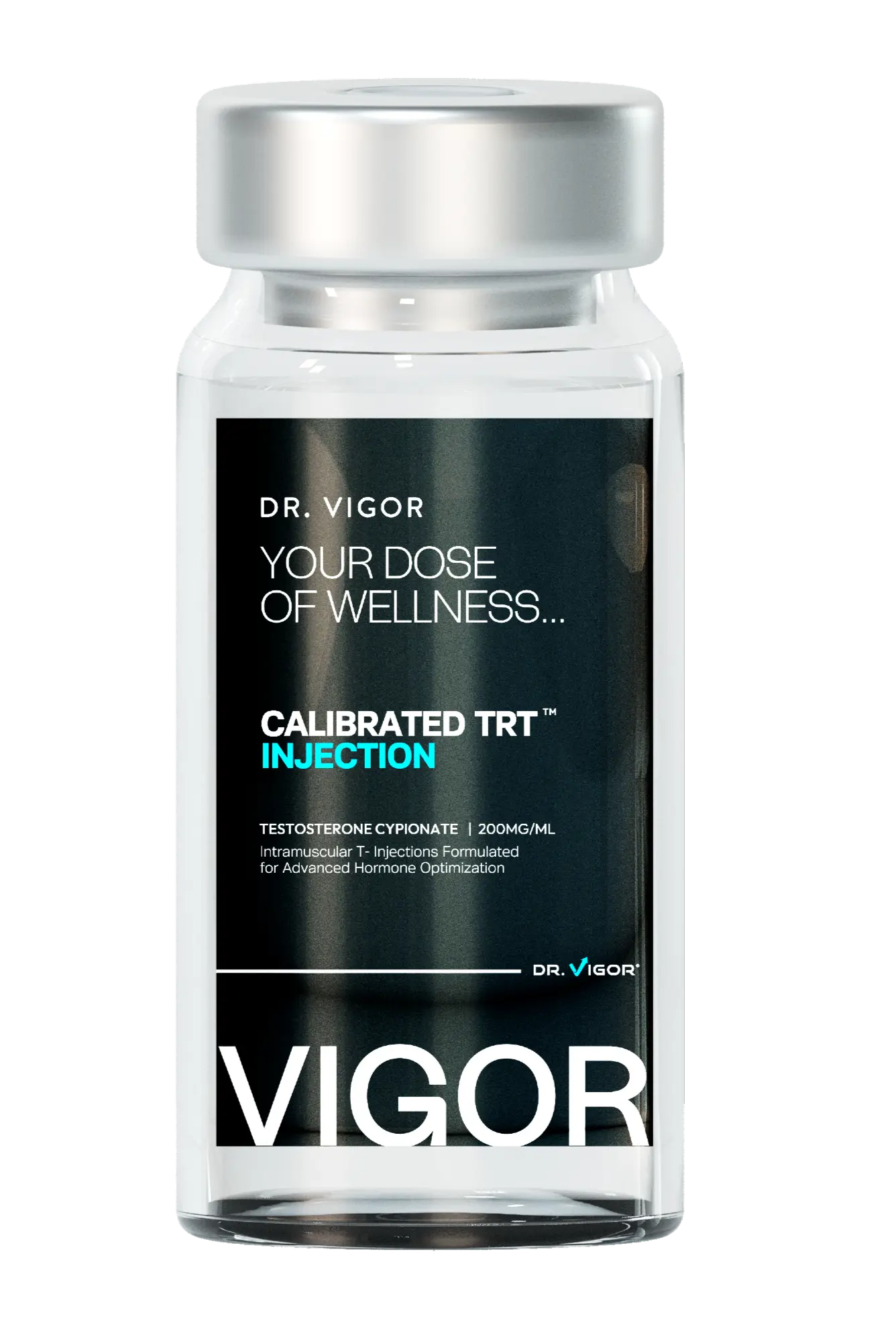
Injectables vs. Pellets
Choose injectables when flexibility, dose control, easy adjustment, and administration choice matter most.
Choose in-clinic injections when you want professional administration and a guided clinical experience.
Choose at-home injections when you want convenience, privacy, and flexibility while staying medically supervised.
Choose pellets when stability, convenience, adherence, and avoiding weekly testosterone swings matter most.
Choose Calibrated TRT® when you want expert guidance choosing between them.
Why Calibrated TRT® Is Superior to Generic TRT
Because testosterone therapy should not be casual, generic, or unsupervised.
TRT can be life-changing for the right man.
It can also be mishandled.
Unmonitored or poorly supervised testosterone therapy can increase the risk of missed contraindications, delayed recognition of side effects, overtreatment, poor symptom control, fertility suppression, blood pressure increases, hematocrit elevation, and formulation-specific complications.
The FDA states that testosterone products are approved only for men who lack or have low testosterone levels in conjunction with an associated medical condition; FDA-approved testosterone products are not approved for men with low testosterone levels who lack an associated medical condition.
Calibrated TRT® is superior because it is designed around medical discipline:
Low energy, slower recovery, and thinner sleep
Weight that won't move despite a clean diet and steady training
Declining libido, erectile concerns, or performance shifts
Brain fog, mood swings, or the feeling of running a half-step behind
Stubborn belly fat or a metabolism that seems stuck

The Science-Based Case for Calibrated TRT®
TRT works best when it is used for the right diagnosis and managed with theright safeguards.
Clinical guidelines support testosterone therapy for men with symptomatic testosterone deficiency after a discussion of risks, benefits, and monitoring. The Endocrine Society recommends testosterone therapy in hypogonadal men to correct symptoms of testosterone deficiency, while also emphasizing proper diagnosis, contraindication screening, and monitoring.
The science also supports why delivery method matters.
Different TRT formulations have different pharmacokinetics, adverse-effect profiles, treatment burdens, and monitoring needs. A review of testosterone replacement preparations emphasizes that formulation choice should consider patient preference, pharmacokinetics, treatment burden, adverse effects, cost, and the possibility that products may need to be switched based on patient response.
That is exactly the Calibrated TRT philosophy.
Not every man should get the same dose.
Not every man should get the same delivery method.
Not every man should be treated without guardrails.
The Calibrated TRT® Experience
Step 1
Symptom Review
We start by understanding what has changed: libido, erections, energy, motivation, mood, focus, sleep, recovery, strength ,body composition, and performance.
Step 2
Clinical Evaluation
Your provider reviews your history, risk factors, medications, fertility goals, prostate considerations, cardio vascular risk factors, sleep health, and baseline labs.
Step 3
Symptom Review
TRT should not be started based on a single vague symptom or one random lab. Diagnosis should be based on symptoms/signs and consistently low testosterone levels. The American Urological Association states that clinicians should use total testosterone below 300 ng/dL as a reasonable cutff supporting the diagnosis of low testosterone.
Step 4
Delivery Method Selection
Your provider helps determine whether calibrated injectables or implantable pellets are the better fit.
For injectables, you can choose:
In-clinic injections for professional administration and guided support.
At-home injections for convenience, privacy, and flexibility.
For pellets, you can choose:
Long-lasting implantable therapy designed to provide sustained testosterone release for 3–6 months.
Step 5
Protocol-Based Guardrails
Before and during treatment, we monitor for contraindications, risk signals, and side effects.
Step 6
Ongoing Calibration
Your protocol is adjusted based on labs,symptoms, side effects, treatment goals, and how your body responds.
What Men May Experience With Properly Calibrated TRT
For appropriately diagnosed men, Calibrated TRT® is designed to support improvements in:
• Libido
• Sexual confidence
• Erection quality
• Energy
• Motivation
• Mood
• Mental clarity
• Training response
• Muscle maintenance
• Body composition
• Recovery
• Bone health
• Overall vitality
Results vary. TRT is not a cure-all, and effects differ by patient, baseline hormone status, delivery method, dosing, adherence, sleep, nutrition, training, and overall health.
Mayo Clinic notes that TRT can improve signs and symptoms of low testosterone in men with hypogonadism, while also cautioning that treating normal aging with testosterone is not advisable.
The strongest clinical argument is not that TRT magically fixes everything.
The strongest argument is that men with true testosterone deficiency deserve a careful, medically supervised protocol designed to restore function while managing risk.
Why Unmonitored TRT Can Be Dangerous
Testosterone should not be treated like a casual wellness supplement
Poorly supervised TRT can cause or worsen problems that should be identified early.
Potential issues include:
• Elevated hematocrit or polycythemia
• Blood pressure increases
• Acne or oily skin
• Mood swings
• Irritability
• Water retention
• Gynecomastia
• Sleep disruption
• Worsening sleep apnea
• Fertility suppression
• Testicular shrinkage
• Prostate-monitoring concerns
• Injection-site pain or inflammation
• Pellet extrusion, infection, bleeding, or fibrosis
• Overtreatment into supraphysiologic levels
The FDA’s 2025 labeling update requires warnings about increased blood pressure for testosterone products, and FDA information on testosterone products reports that TRAVERSE did not demonstrate a new safety signal or trend in adverse cardiovascular outcomes with testosterone use in the studied population.
That is why Calibrated TRT® usesprotocol-based guardrails, proactive labs, clinical oversight, and symptom-based adjustments.
The goal is not simply to raise testosterone.
The goal is to improve how you feel and function while keeping treatment medically controlled.
If your current TRT plan leaves you feeling inconsistent, under-monitored, or unsure whether your dose and delivery method are right for you, your problem may not be testosterone.
Your problem may be the protocol.
Calibrated TRT® gives men a better path:
• In-clinic injections for guided administration.
• At-home injections for convenience and flexibility.
• Implantable pellets for long-term stability and fewer treatment reminders.
• Medical guardrails to identify contraindications and manage side effects.
• Ongoing monitoring to keep therapy aligned with your body.
Frequently Asked Questions
Do Not Settle for Regular TRT.
Testosterone Injections
Testosterone Injections
Implantable Pellets
For men who want long-lasting, steady testosterone delivery that can last up to 6 months. All three are guided by the same principle: